
Cardiovascular function
The Task Force Monitor records cardiovascular responses. Assessment includes the Ewing battery of tests and heart rate variability (HRV) analysis.
The project studies how the autonomic nervous system responds to everyday physiological and cognitive demands in people with multiple sclerosis and myasthenia gravis.
The primary aim is to compare autonomic responses in people with multiple sclerosis or myasthenia gravis with healthy participants during orthostatic and cognitive challenges. The study will also examine associations with fatigue and anxiety.
The study plans to include 100 people with multiple sclerosis, 50 with myasthenia gravis and 50 healthy participants. It combines clinical and psychometric assessments with functional autonomic tests. Selected molecular analyses are also planned for the multiple sclerosis group.
The study combines several non-invasive and standardised measurements to assess autonomic function from different perspectives.
The Task Force Monitor records cardiovascular responses. Assessment includes the Ewing battery of tests and heart rate variability (HRV) analysis.
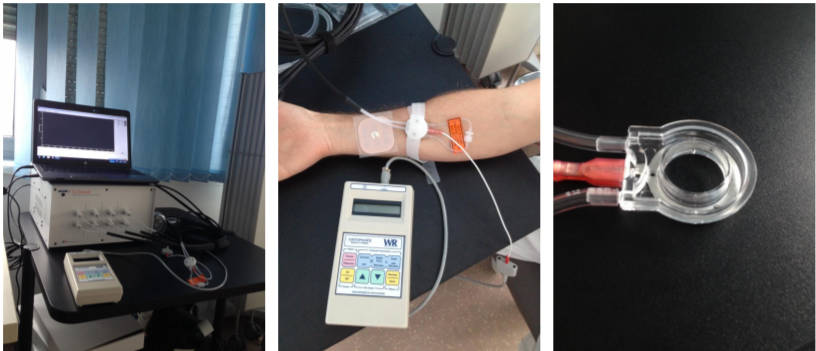
Q-Sweat assesses postganglionic sympathetic cholinergic function, while SUDOSCAN measures electrochemical skin conductance associated with sweat gland function.
Pupillometry non-invasively records pupil size and its response to light, which are jointly controlled by the sympathetic and parasympathetic systems.
A bladder ultrasound scanner quickly and non-invasively measures post-void residual urine and supports assessment of autonomic bladder control.
This overview is based on the project application. Implementation and participation depend on the approved study protocol.